August 25, 2026
Why Paint Peels Early in Navi Mumbai Homes, and How to Stop It Happening Again
Paint peeling within a year is almost never about the paint brand. Here is what actually causes it, and what to check before you pay for the next coat.
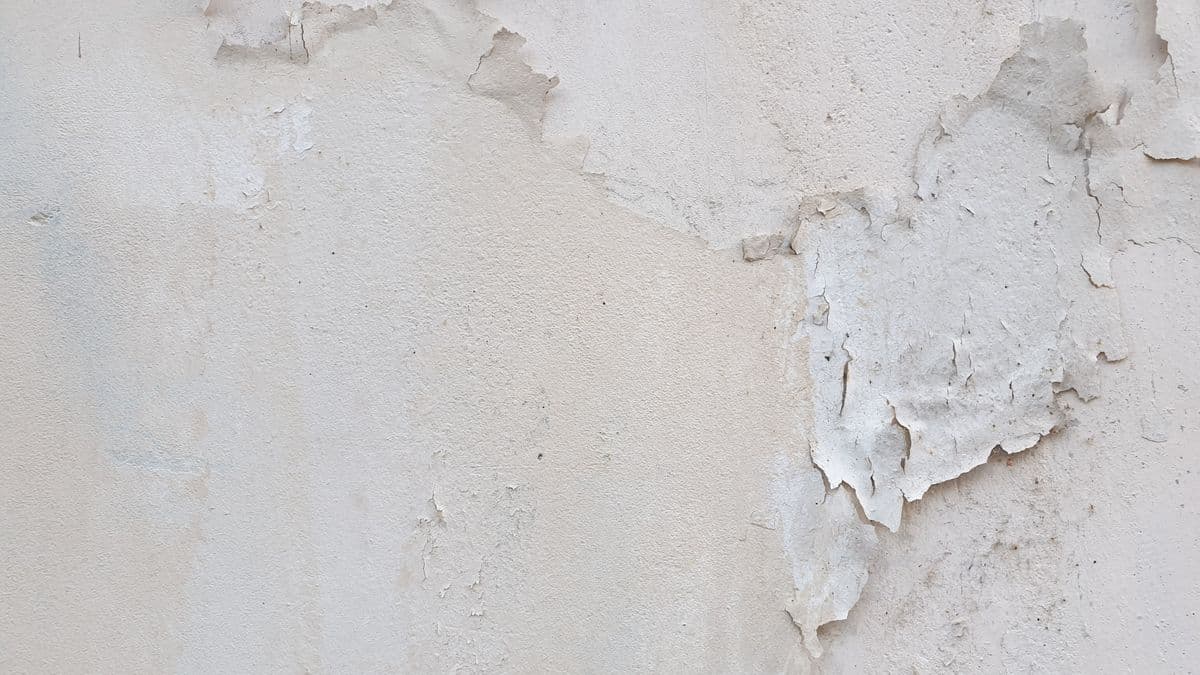
Photo: Pexels/Krakograff Textures
A paint job that starts bubbling or peeling within a year is one of the most common complaints homeowners across Navi Mumbai raise, and almost every time the paint itself is not actually the problem. Innovation Interior has painted homes and offices from its Kharghar studio since 2005, and the pattern behind early peeling is nearly always the same: something underneath the paint failed, not the coat on top.
What actually causes paint to peel early in Navi Mumbai
Most homeowners assume a cheaper paint brand is to blame when a wall starts flaking, so the instinct on the next job is to spend more on the paint itself. That usually does not fix anything, because paint failure is overwhelmingly a preparation and moisture problem, not a product problem. A premium emulsion applied over a damp wall or without primer will fail in roughly the same way a budget one would, just perhaps a little slower. The paint coat is the last five percent of the job. The other ninety-five percent is what happens to the wall before that coat ever goes on.
Painting over a damp wall, or before waterproofing has cured
Moisture trapped behind a paint film is the single biggest cause of peeling in this part of Navi Mumbai, and it shows up in a few different ways. Sometimes it is an active leak, a bathroom pipe seeping into the wall behind it, or terrace seepage coming through during the monsoon. Sometimes it is simply humidity: Navi Mumbai stays humid for months at a stretch, and a wall that has not had time to dry out properly will trap that moisture under the paint, where it turns to vapour and pushes the film outward as bubbles that eventually crack open.
The same problem shows up when painting happens too soon after waterproofing work. Waterproofing needs proper curing time before anything goes over it, and painting on top before that curing is complete traps moisture in exactly the same way an active leak does. This is why our civil work and painting teams sequence a job together rather than treating them as two separate contractors on two separate schedules: a wall gets painted only once the waterproofing behind it has actually finished curing, not once it merely looks dry on the surface.
Skipping proper surface prep and primer
The second most common cause is far less dramatic than a leak: the wall simply was not prepared properly before the first coat went on. That means filling cracks with putty, sanding the surface smooth, and applying a primer coat before any paint touches the wall. Skip primer, or rush the putty and sanding stage to save a day on the schedule, and the paint has a weaker surface to bond to. It may look fine on handover day and start failing within months, which is exactly why rushed prep is such an easy problem to miss when you're the one paying for the job and not the one doing it.
This is also the stage where old, flaking paint from a previous job needs to be properly scraped back before repainting, not simply coated over. Painting a fresh layer directly onto a failing old layer just gives the new paint a weak, unstable base to sit on, and it will usually peel again in roughly the same places the old paint did.
The wrong paint grade for exterior or coastal humidity
Not every emulsion is built for the same conditions. An interior-grade paint used on an exterior wall, or an ordinary paint used where a moisture-resistant grade was actually needed, such as a bathroom, kitchen or an external wall exposed to Navi Mumbai's salt-laden coastal air, tends to fail faster regardless of how well the prep was done. Exterior and high-humidity areas need a paint formulated for that exposure, weather-resistant on the outside, moisture-resistant where steam and humidity are constant indoors. Using the wrong grade in the right place, or the right grade in the wrong place, is a specification mistake, not a paint quality one.
What to check before you pay for any paint job
Before you agree to a repaint, on a fresh wall or from anyone doing the work, ask a few direct questions. Ask whether the wall will be checked for dampness before painting starts, not just visually but with the source of any past leak actually resolved first. Ask what surface prep is included: putty, sanding and primer should be a stated part of the job, not an assumption. Ask which paint grade is being used where, particularly for a bathroom, kitchen or exterior wall. And if waterproofing work was done recently or is planned alongside the painting, ask how much curing time is being built into the schedule before paint goes over it. A contractor who answers these clearly is far more likely to hand over a wall that still looks right in year two, not just on the day they leave.
None of this means every peeling wall needs a full repaint either. If the damage is limited to one small patch and the cause behind it, an old leak, a damp corner, has already been fixed, a proper local patch repair with a colour-matched touch-up is often enough, and a full room repaint would be more than the wall actually needs. The right fix depends on how much of the wall has actually failed and why, not on defaulting to the biggest job available.
Questions
Frequently asked questions.
How do I know if my last paint job used proper surface prep?
Peeling that starts as small bubbles rather than a flat, even flake is often a sign moisture was trapped underneath rather than the surface being properly primed. If the paint comes away in a thin, brittle sheet with no putty or filler visible beneath it, prep was likely skipped. When in doubt, ask whoever painted it what prep steps were actually done, not just what paint brand was used.
Does painting during Navi Mumbai's monsoon cause peeling?
Painting itself is not the problem, painting a wall that has not had time to dry out properly is. Humidity during the monsoon means walls take longer to dry, so we check moisture levels before starting rather than working to a fixed calendar date, and will tell you honestly if a wall needs more drying time before it is ready.
Can peeling paint be fixed without repainting the whole wall?
Often yes, if the peeling is limited to one patch and the underlying cause, usually a leak or damp source, has already been resolved. A local patch repair with a colour-matched touch-up is usually enough in that case. If the peeling is spread across the wall or the moisture source is still active, patching alone will not hold and a fuller repaint is the honest answer.
How long should a good paint job actually last?
A well-prepped interior wall, painted with the right grade for that room, should comfortably hold for several years before it needs attention again. Bathrooms, kitchens and exterior walls see more stress from humidity and weather, so they naturally need repainting sooner than a dry interior room. We do not attach a fixed guarantee figure to this since it depends on the room and how it is used, but 'peeling within a year' is a sign something underneath failed, not normal wear.
Do you paint over a wall that is still damp or has an active leak?
No. If a wall is actively leaking or still damp from a recent waterproofing job, we hold off and coordinate with our civil work team to resolve that first, since painting over it would only trap the moisture and cause the same peeling again within months. It costs less time overall to fix the source first than to repaint the same wall twice.
Which areas around Kharghar do you cover for painting?
Our studio is in Sector 15, Kharghar, and we take on painting work across Navi Mumbai, Panvel, Kamothe, Kalamboli, Nerul, Vashi, Belapur, Seawoods, Sanpada, Airoli, Ghansoli and Kopar Khairane.
Related service
Want this done properly the first time?
Free site visit anywhere in Navi Mumbai, Panvel to Vashi. Key Stone Elita, Shop 11, Sector 15, Kharghar, Navi Mumbai 410210.
Get a free quote