August 18, 2026
POP or Gypsum False Ceiling? A Room-by-Room Guide for Navi Mumbai Homes
The real difference between P.O.P. and gypsum board, and which one actually suits your room, before you pick either.
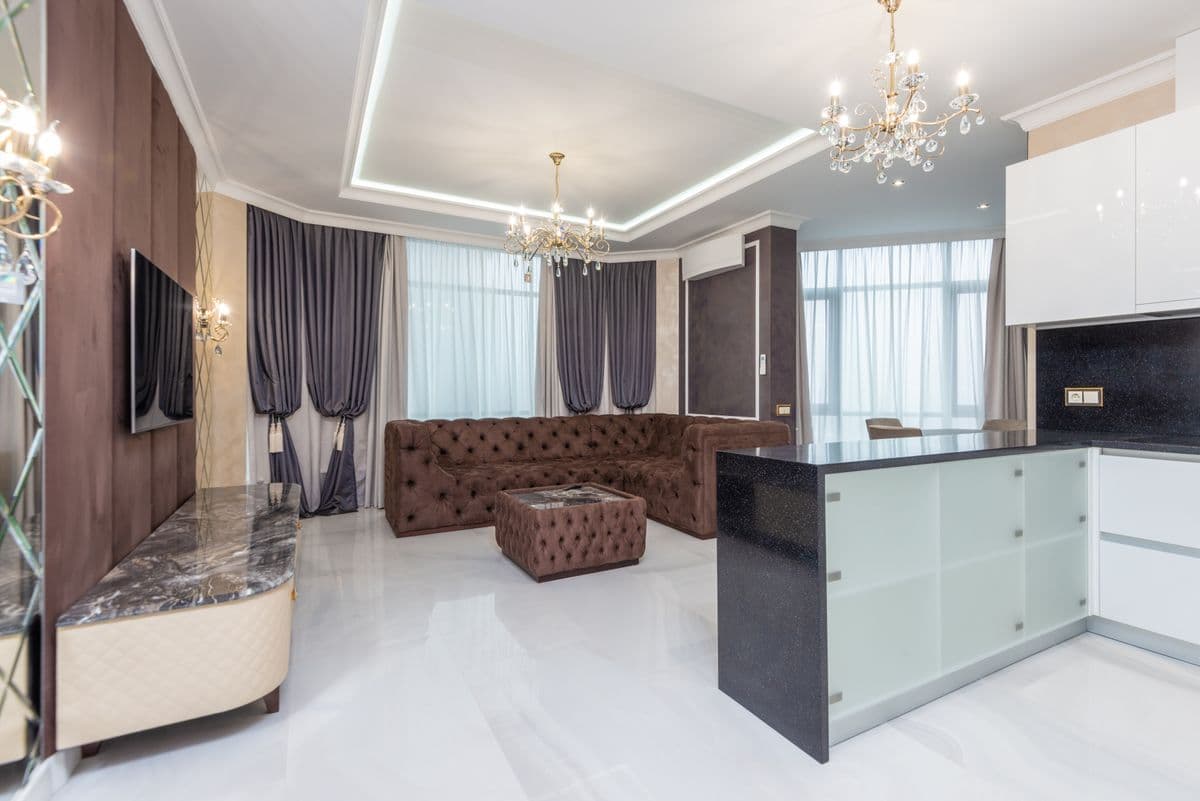
Photo: Pexels/Max Vakhtbovych
Ask three people whether to go with P.O.P. or gypsum board for a false ceiling and you will usually get three confident, contradictory answers. Both materials do the same basic job, hiding wiring and ductwork while giving you a surface to build lighting into, but they behave differently on site and suit different rooms. Innovation Interior has installed both across Navi Mumbai homes since 2005, and the honest answer is that neither one is simply better. It depends on the room, the design you want, and how much drying and finishing time you can allow before the rest of the work continues.
What actually separates P.O.P. from gypsum board
P.O.P., plaster of Paris, is mixed and moulded on site, wet work that has to dry and cure before it can be finished. That on-site moulding is exactly why it can do curves, coves and layered shapes that a flat board struggles to match. Gypsum board arrives prefabricated and is fixed to a metal frame, so installation is faster and cleaner, less dust in an occupied home, and it comes apart in sections if a portion ever needs repair or an electrician needs access above it.
Durability is where gypsum tends to hold up better over years of daily use, since it resists moisture and humidity more consistently than P.O.P. once the interior is sealed and painted. That matters more in a Navi Mumbai flat than in a drier climate. Neither material is waterproof, and a false ceiling directly under a leaking slab or an unresolved terrace seepage issue will show damage regardless of which one you choose. That is a waterproofing problem to fix first, not a ceiling material decision.
Living room: where the design usually points to P.O.P.
A living room is where most homeowners want a statement, a layered centre panel with cove lighting, a curved perimeter drop, or a design that follows an irregular room shape. That is P.O.P.'s strength. It moulds to a shape a flat board cannot easily replicate, and a living room ceiling is usually finished once and left alone for years, so the longer on-site drying and finishing time is less of a constraint than it would be in a room you need back in use quickly.
If your living room design is simpler, a flat drop with recessed spot lighting and no curves, gypsum does that just as well and finishes faster with less mess. The design decides the material here more than the room does.
Bedroom: usually the case for gypsum
Bedrooms rarely need the dramatic layering a living room does. A simple perimeter drop with soft, indirect cove lighting is usually the whole brief, and gypsum board delivers that cleanly with a faster, quieter installation, which matters more in a room you want back in use quickly. It is also easier to open up later if a light fitting needs to move or wiring needs attention, since gypsum panels are meant to be removable in sections.
P.O.P. still has a place in a bedroom if the brief specifically calls for a curved or sculpted design element, but for most bedroom ceilings in the homes we work on, gypsum is the simpler, faster choice without giving up anything the room actually needed.
Kitchen and bathroom: humidity changes the calculation
Kitchens and bathrooms see steam, cooking heat and, in a bathroom, direct moisture in the air even without a leak. This is where gypsum's better moisture resistance matters most, particularly through a Navi Mumbai monsoon when indoor humidity stays high for weeks at a stretch. A moisture-resistant gypsum board, not a standard one, is the right specification here, and it is worth confirming which grade is being used rather than assuming all gypsum board is the same.
P.O.P. is used less often in these rooms for exactly this reason. It is not that it cannot be done, but the humidity resistance case for gypsum is strongest in the two rooms of the home that see the most sustained moisture.
What this actually costs to decide, without a number attached
We are not going to give you a per-square-foot figure here, because a simple perimeter drop and a multi-level curved design with cove lighting are not comparable jobs, and quoting one number would mislead you about the other. What we can tell you honestly is the trade-off: P.O.P. is generally the more design-flexible, lower-material-cost option but takes longer to dry and finish; gypsum installs faster with less site mess but the board itself typically costs more than P.O.P. plaster. A free site visit gets you a real comparison for your actual room and design, not a generic range that will not match your ceiling.
When you don't need either
Not every room needs a false ceiling at all. If your existing ceiling is level, crack-free and you only want to change the lighting, a surface-mounted or track light fitting can do that without a false ceiling above it. A false ceiling earns its place when you specifically want concealed wiring, layered or cove lighting, or a design element the flat slab cannot give you, not by default on every room in a renovation.
Questions
Frequently asked questions.
Which is cheaper, POP or gypsum false ceiling?
P.O.P. plaster is generally the lower material cost of the two, but installation takes longer because of drying and curing time, and labour time adds to the total. Gypsum board itself typically costs more per square foot but installs faster with less site mess. The honest total depends on your design, not just the material, so we do not quote a flat figure without seeing the room.
Does gypsum false ceiling last longer than POP in Navi Mumbai?
Gypsum generally handles humidity and daily wear better over time, which matters through a Navi Mumbai monsoon. Neither material is waterproof, so a false ceiling under an active leak or unresolved seepage will show damage regardless of which one you pick. Fix the waterproofing first.
Can POP false ceiling be repaired if it cracks or gets damaged?
Yes, but repair usually means patching and replastering the affected section, which can be visible if not colour and texture matched carefully. Gypsum board sections can be unscrewed and replaced individually, which is generally a cleaner repair for accessing wiring or fixing localised damage.
How long does a false ceiling take to install?
P.O.P. takes longer overall because the moulded plaster needs to dry and cure in stages before finishing. Gypsum board, being prefabricated and fixed to a frame, generally installs faster with less waiting time built into the schedule. We confirm an actual timeline once the design and room are finalised.
Is a false ceiling necessary in every room?
No. If your ceiling is already level and you only want different lighting, a surface-mounted or track fitting can do that without a false ceiling. A false ceiling is worth it when you specifically want concealed wiring, layered lighting or a design shape the flat slab cannot give you.
Do you install both POP and gypsum false ceilings in Kharghar and Navi Mumbai?
Yes, our civil work team handles both, planned alongside the lighting layout rather than added afterwards. We work across Navi Mumbai from Panvel to Vashi, including Kamothe, Kalamboli, Nerul, Belapur, Seawoods, Sanpada, Airoli, Ghansoli and Kopar Khairane.
Related service
Want this done properly the first time?
Free site visit anywhere in Navi Mumbai, Panvel to Vashi. Key Stone Elita, Shop 11, Sector 15, Kharghar, Navi Mumbai 410210.
Get a free quote